
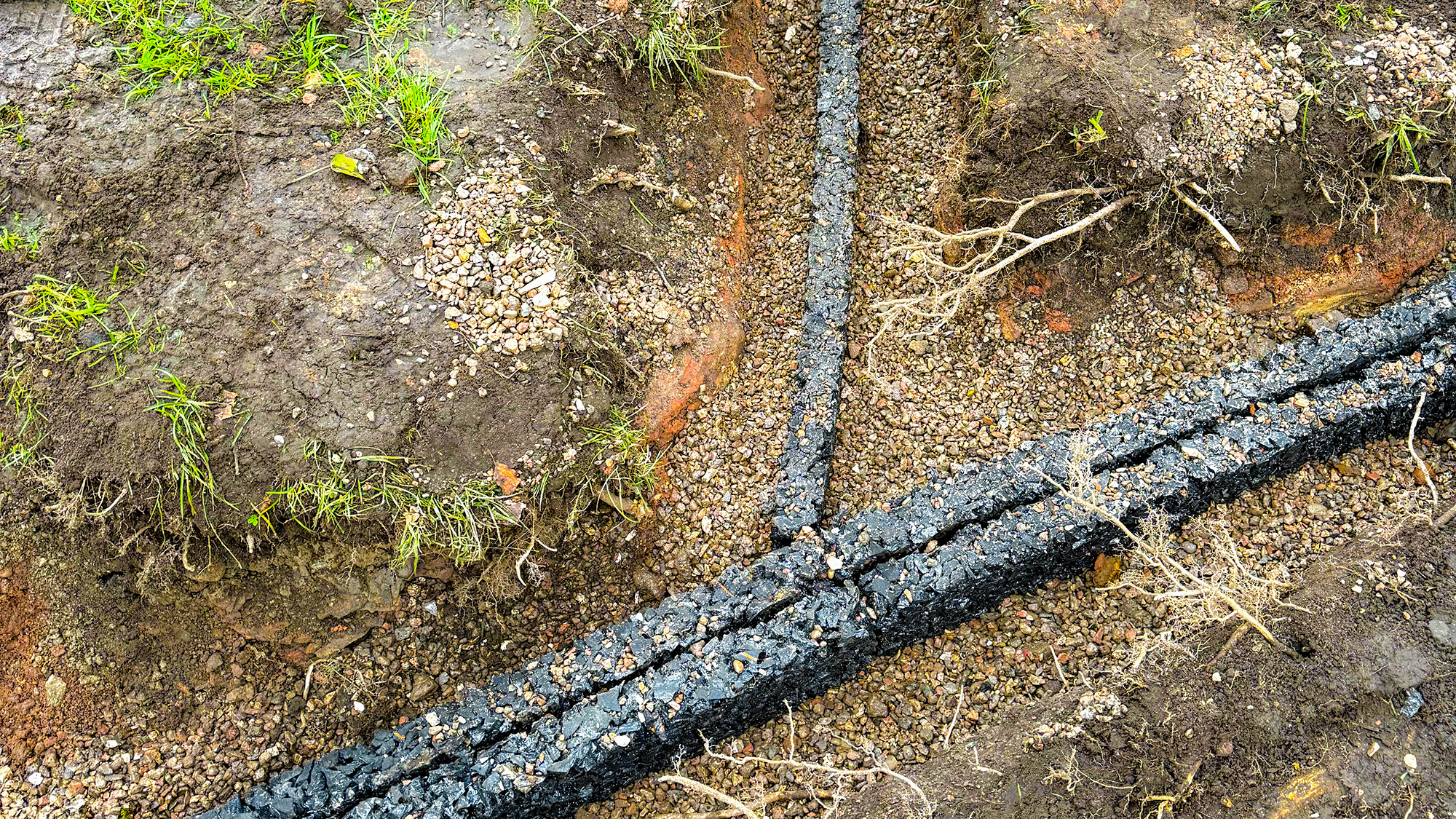
Engineered Replacement for Traditional Grip Drains
Grip Strip
Modular surface water interception and redistribution for rural roads and verges, eliminating the maintenance cycle entirely.
Intercept · Distribute · Disperse
The Problem with Traditional Grip Drains
Grip drains are shallow channels cut across roadside verges to redirect surface water into adjacent ditches. With approximately 313,500 miles of rural roads in the UK and over 300 million individual grip drains across the national network, maintenance represents a significant ongoing cost and labour burden for local authorities.
Traditional grips require annual surface-level clearance, plus deep re-cutting every 5-10 years. This cycle absorbs seasonal budgets, demands repeated traffic management, and delivers only temporary results before sediment returns.
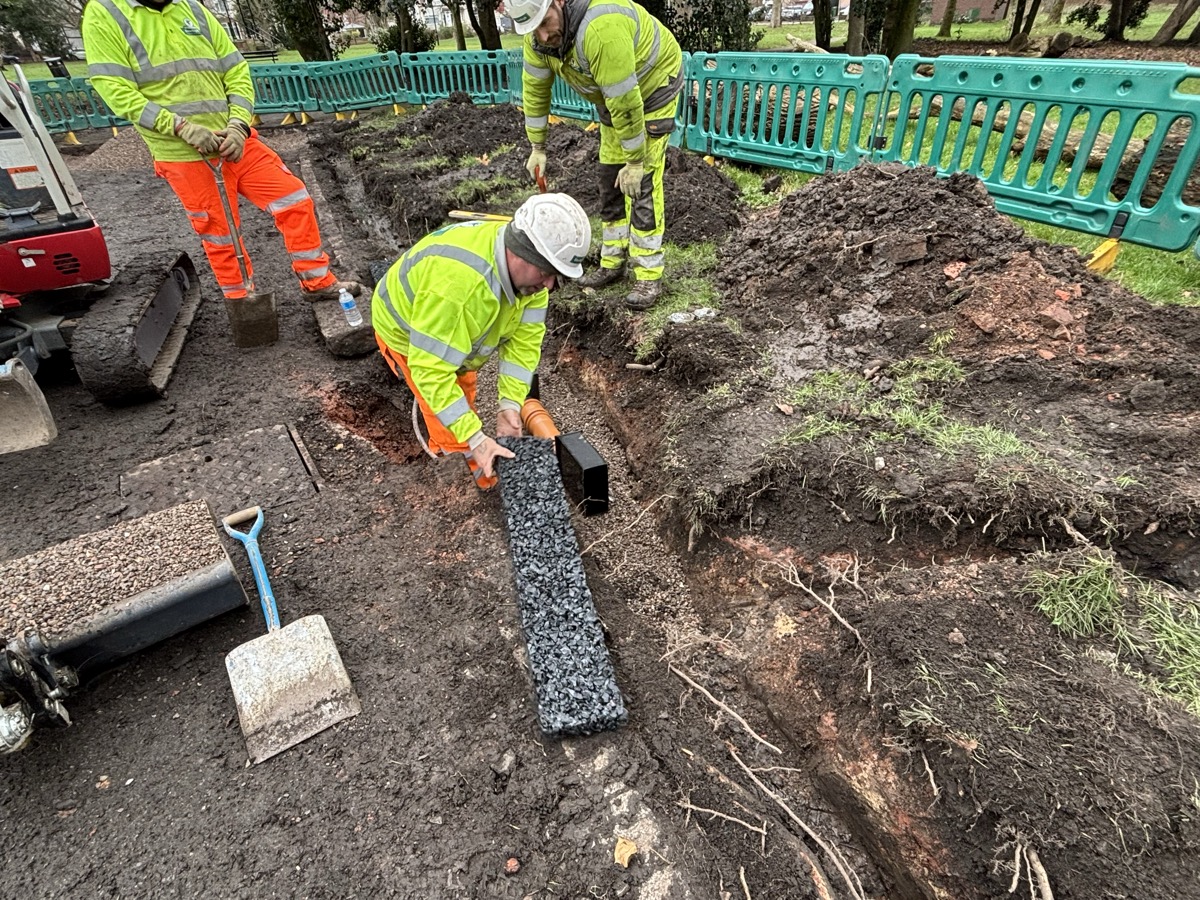
A System-Based Alternative
The Grip Strip is not a drain. It's a modular interception and redistribution system that captures surface water and disperses it laterally into the surrounding ground.
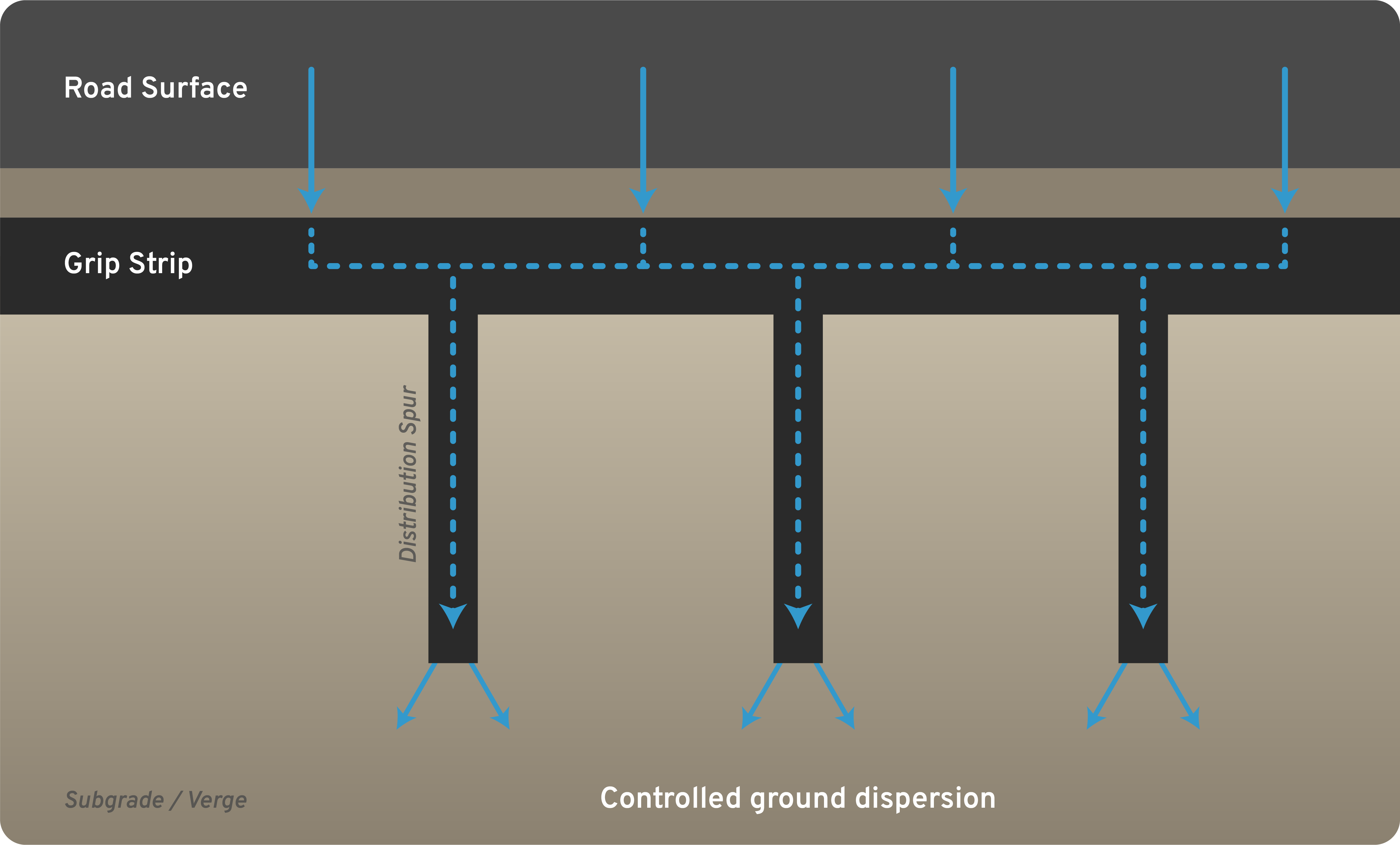
Not just drainage — controlled lateral dispersion. Unlike traditional grip drains that simply channel water downhill, the Grip Strip intercepts, distributes, and disperses surface water across a wide area, reducing concentrated flow and erosion.
Designed to eliminate routine maintenance cycles. No annual cleaning. No re-trenching. No ongoing operational costs.
Validated Performance
Independent Testing Results
Testing based on ASTM D5101 standards demonstrates exceptional performance under real-world conditions
China Clay Testing
Water continued to pass through despite visible particle migration, indicating robust self-cleansing flow paths that maintain performance over time.
Silty Sand Conditions
The unit maintained consistent permeability even under heavy silt loads, reinforcing its suitability for minimal or zero maintenance applications.
Long-term Performance
Independent analysis confirms the system remains permeable and functional, supporting the 20+ year designed service life.
Financial Impact
Cost Analysis & Savings
Comprehensive financial comparison demonstrates significant long-term savings over traditional grip maintenance cycles
| Cost Component | Traditional Grips (per 1km) | Grip Strip (per 1km) | Annual Savings |
|---|---|---|---|
| Regular Cleaning | £3,000/year | £0 | £3,000 |
| Re-trenching (5-year cycle) | £1,200/year (amortised) | £0 | £1,200 |
| Installation/Material Cost | — | £975/year (amortised over 20 years) | — |
| Total Annual Cost | £4,200 | £975 | £3,375 76% reduction |
Industry Standard Maintenance Cycles
Local authorities across the UK typically maintain verge grip drains to manage runoff and reduce flood risk:
Devon County Council
Annually (cleared every year)
Bath & North East Somerset Council
Annually
Surrey County Council
Every 1-2 years depending on priority area
While deep re-cutting (re-trenching) is typically carried out every 5-10 years, surface-level clearance of grips is often performed annually, placing significant strain on rural highways budgets.
Engineering Data
Technical Specifications
Grip Strip 100mm unit engineered for optimal performance in rural drainage applications
Unit Dimensions
- Width 200mm
- Length 1m
- Depth 100mm
- Weight ~8.5kg
Performance Features
- Maintenance Zero intervention
- Performance Period 20+ years
- Testing Standard ASTM D5101
- Flow Characteristics Self-cleansing
Installation Benefits
- Traffic Disruption Minimal
- Ongoing Maintenance None required
- Operational Costs Eliminated
- Budget Relief Significant
Ready to Replace Traditional Grip Drains?
Discover how the Grip Strip can deliver 76% cost savings and eliminate maintenance burdens for your rural road network.