
Étude de cas — Burn Valley Gardens, Hartlepool
Burn Valley
Gardens
Chemins en enrobé poreux et drainage Grip Strip affleurant protégeant le talus d'un parc historique
Vue d'ensemble du projet
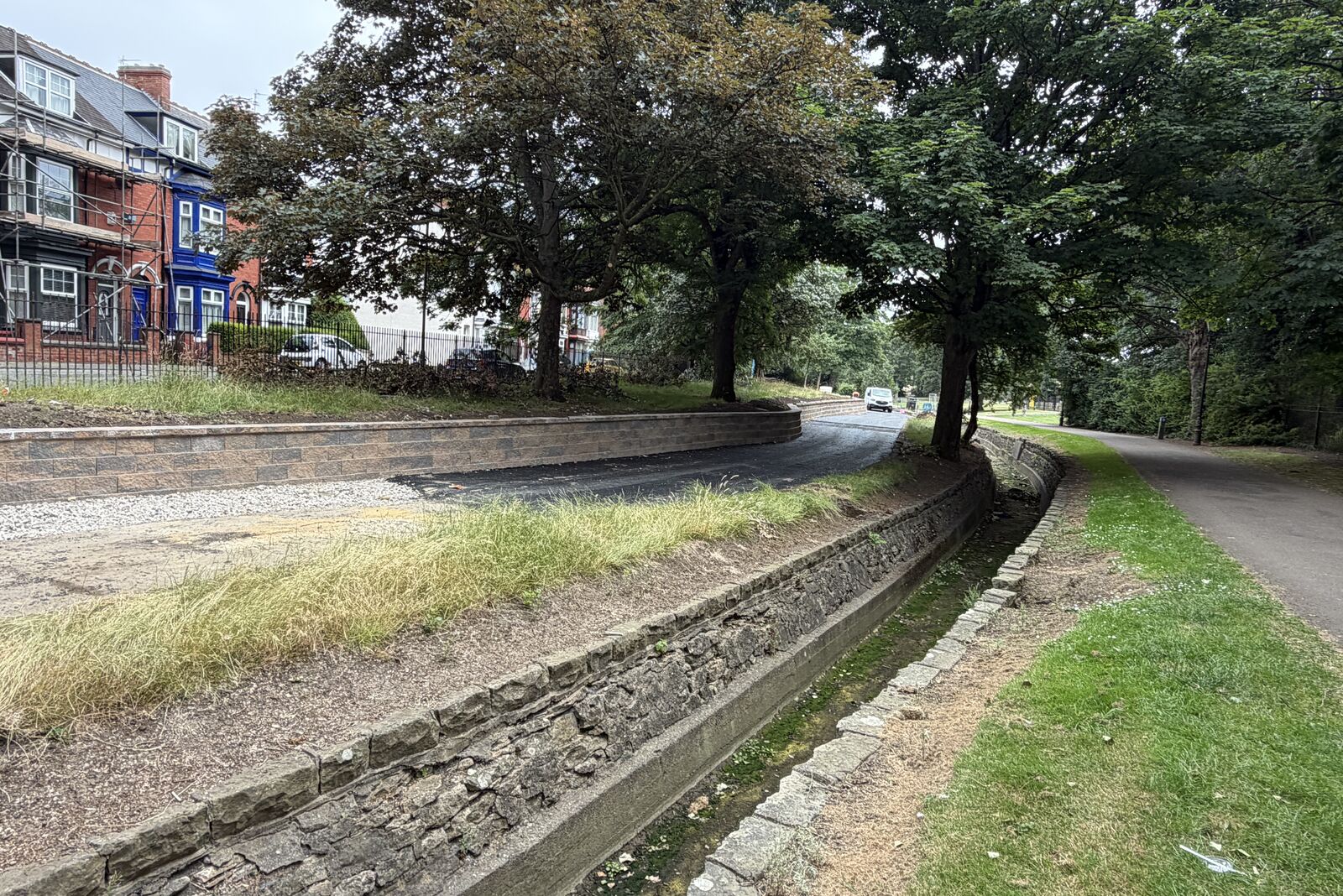
Burn Valley Gardens is a historic Edwardian park following the course of a channelised burn through residential Hartlepool. As part of Hartlepool Borough Council's Town Centre to Catcote Road cycle route — one of the Tees Valley Combined Authority (TVCA) cycle schemes — the park's terraced paths off Colwyn Road were renewed, and 600 m of Rosehill Grip Strip was installed to solve a long-standing runoff problem that was eroding the embankment and undermining the park's original stone retaining walls.
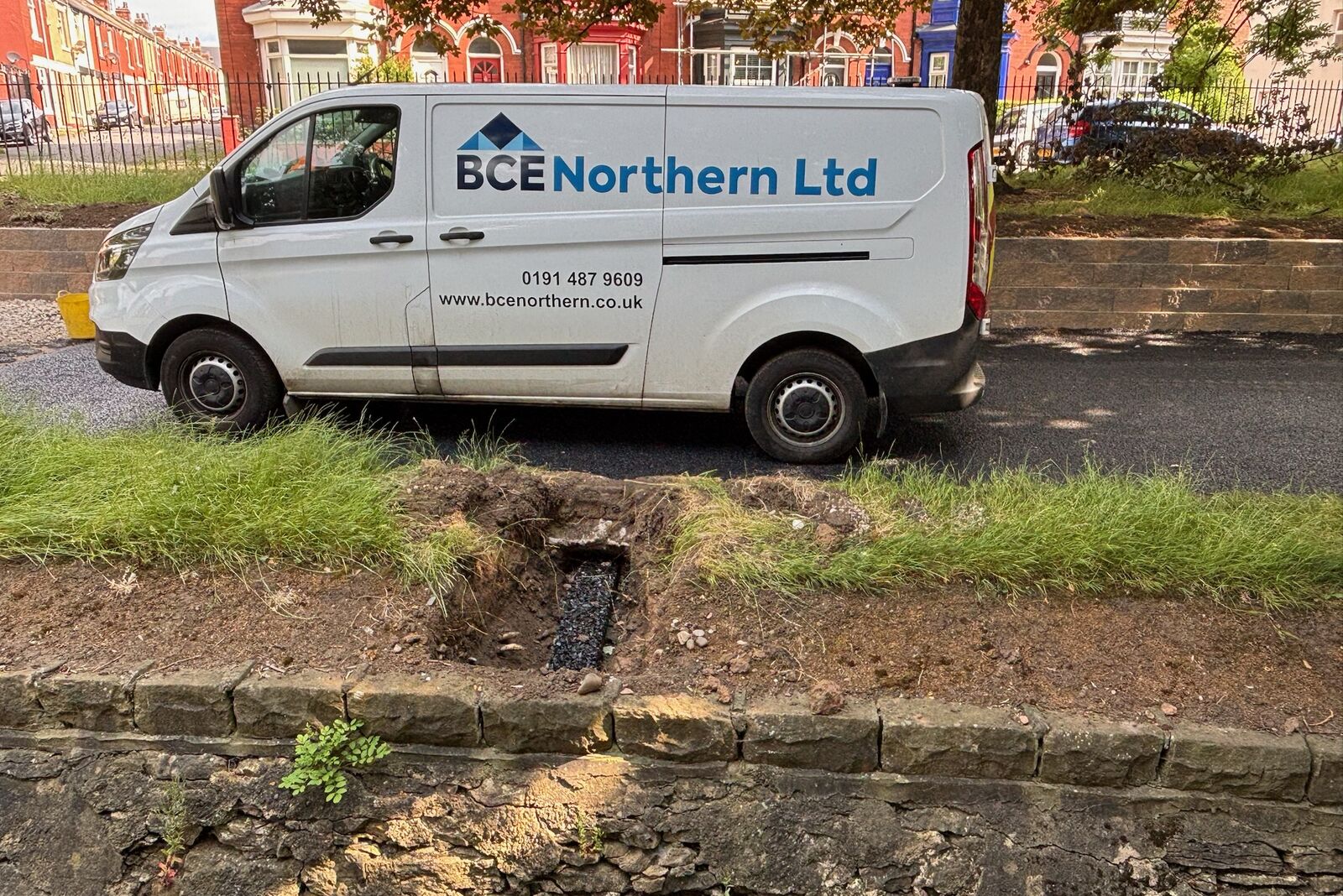
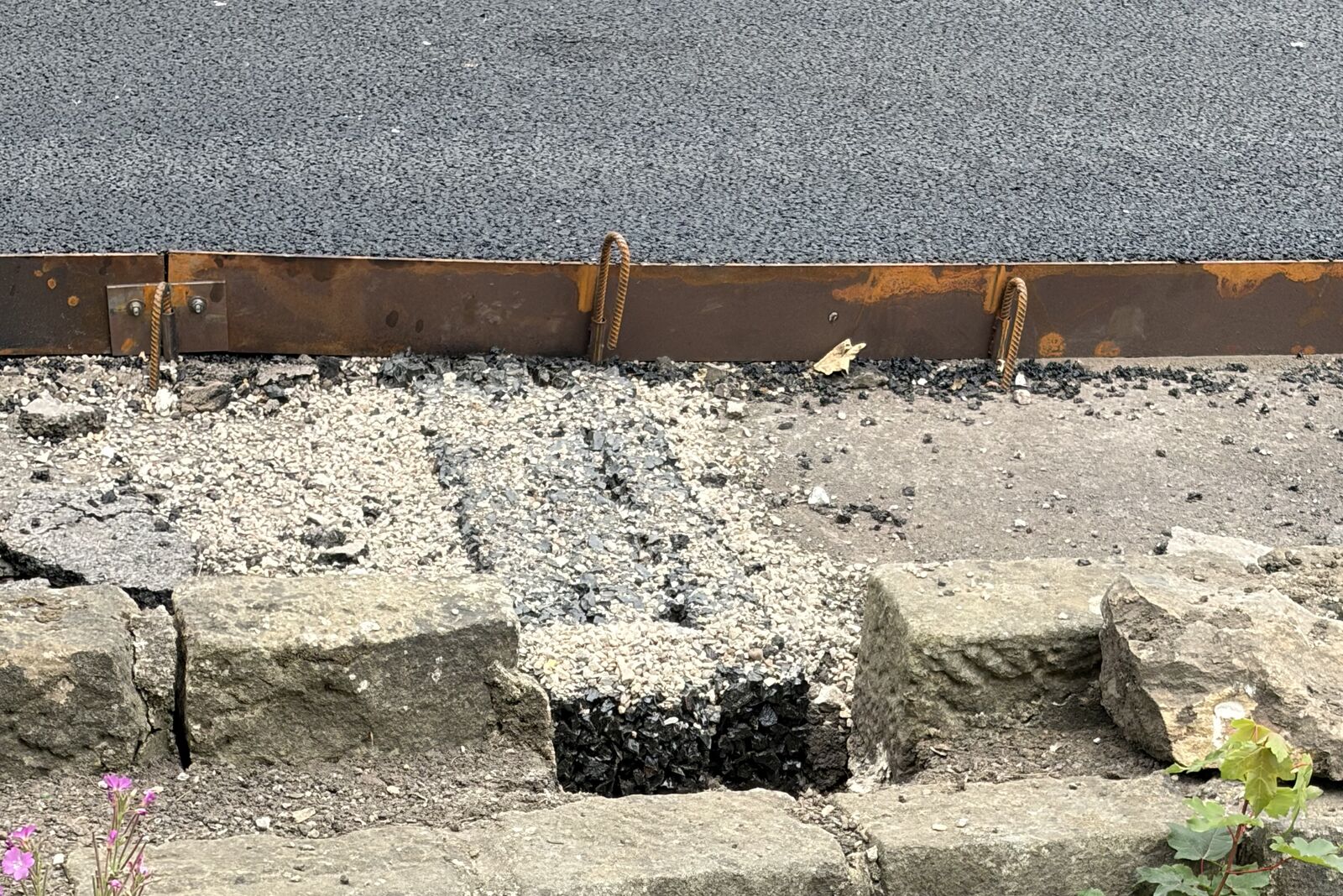
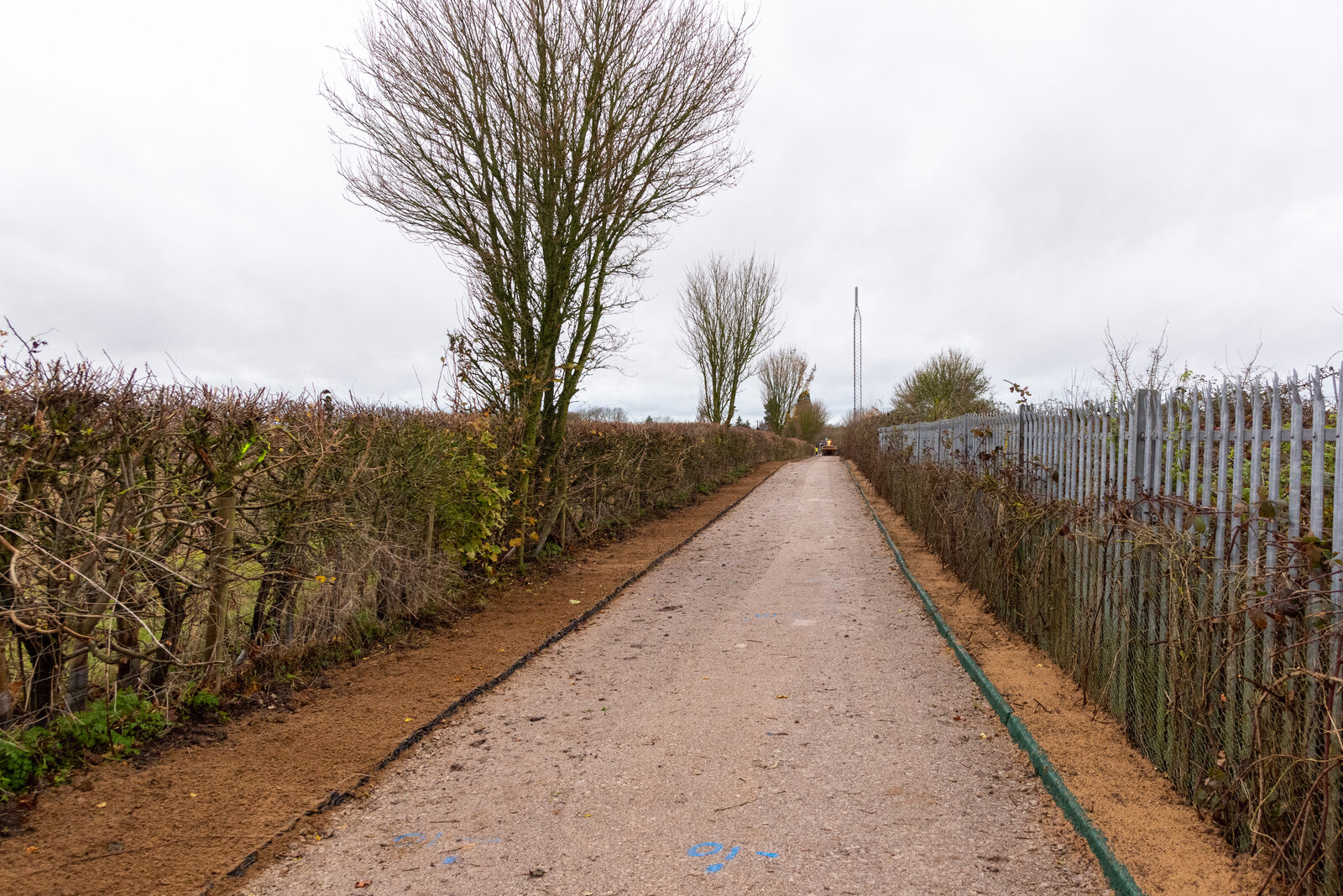
En collaboration avec l'entreprise BCE Northern Ltd, les terrasses ont été resurfacées en enrobé poreux posé en pente, de sorte que l'eau de pluie traversant et parcourant la surface soit dirigée vers des lignes de drainage Grip Strip affleurantes à chaque bord de terrasse. Les bandes collectent l'eau et l'acheminent vers des exutoires discrets percés dans les murs existants, la conduisant en toute sécurité en bas de la pente jusqu'à Burn Valley Beck.
Le résultat est un réseau de chemins entièrement drainant, sans avaloirs ni grilles à entretenir, sans eau stagnante, et avec des exutoires contrôlés à la place du ruissellement incontrôlé qui affouillait les talus — réalisé sans tranchées profondes, sans lourds engins de terrassement et sans perturber les racines des arbres matures qui bordent les allées.
Le défi
- Ruissellement incontrôlé provenant des chemins en terrasses affouillait le talus enherbé et entraînait les matériaux situés derrière les murs de soutènement en pierre historiques du parc
- Ouvrages patrimoniaux — une excavation profonde pour un drainage canalisé conventionnel le long des vieux murs risquait de déstabiliser leurs fondations
- Racines d'arbres matures s'étendent sous les bordures des chemins dans tout le parc — des tranchées de drainage traditionnelles les auraient sectionnées de plein fouet, et les gros engins de terrassement nécessaires à leur creusement auraient compacté les zones racinaires et abîmé le parc environnant
- Abondante litière de feuilles sous les arbres matures du parc obstruerait rapidement les avaloirs et grilles conventionnels
- Espace public ouvert exigeait une finition affleurante, sans risque de trébuchement, sûre pour les piétons, poussettes, vélos et tondeuses
- Site en terrasses à forte pente — l'eau devait être collectée à chaque niveau et acheminée de manière contrôlée jusqu'au ruisseau en fond de vallée
La solution
- Construction poreuse pleine épaisseur posée en pente — couche de roulement en enrobé poreux de 30 mm et couche de liaison poreuse de 70 mm sur une sous-couche à granulométrie ouverte, dirigeant l'eau de pluie à travers et le long de la surface vers les lignes de drainage
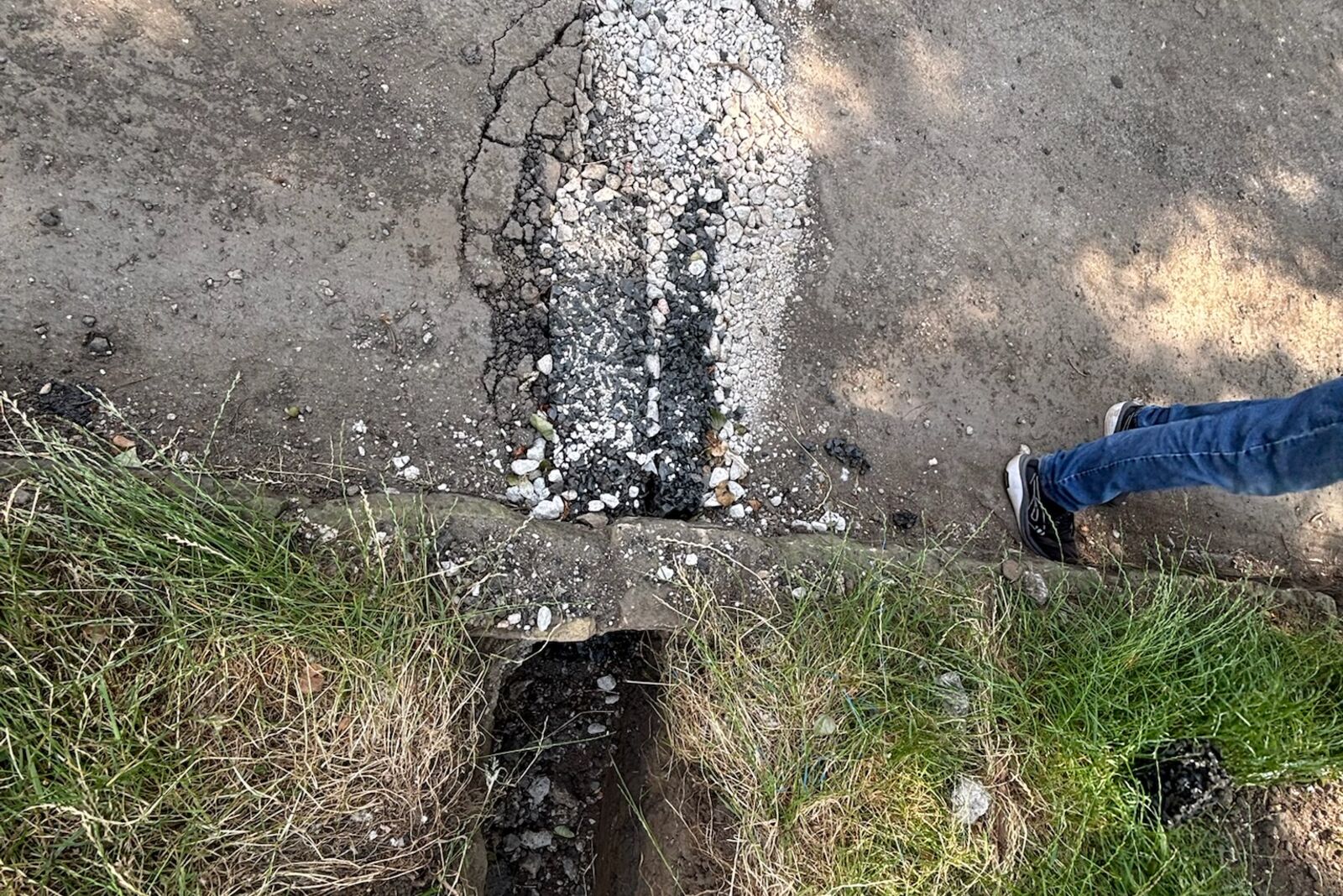
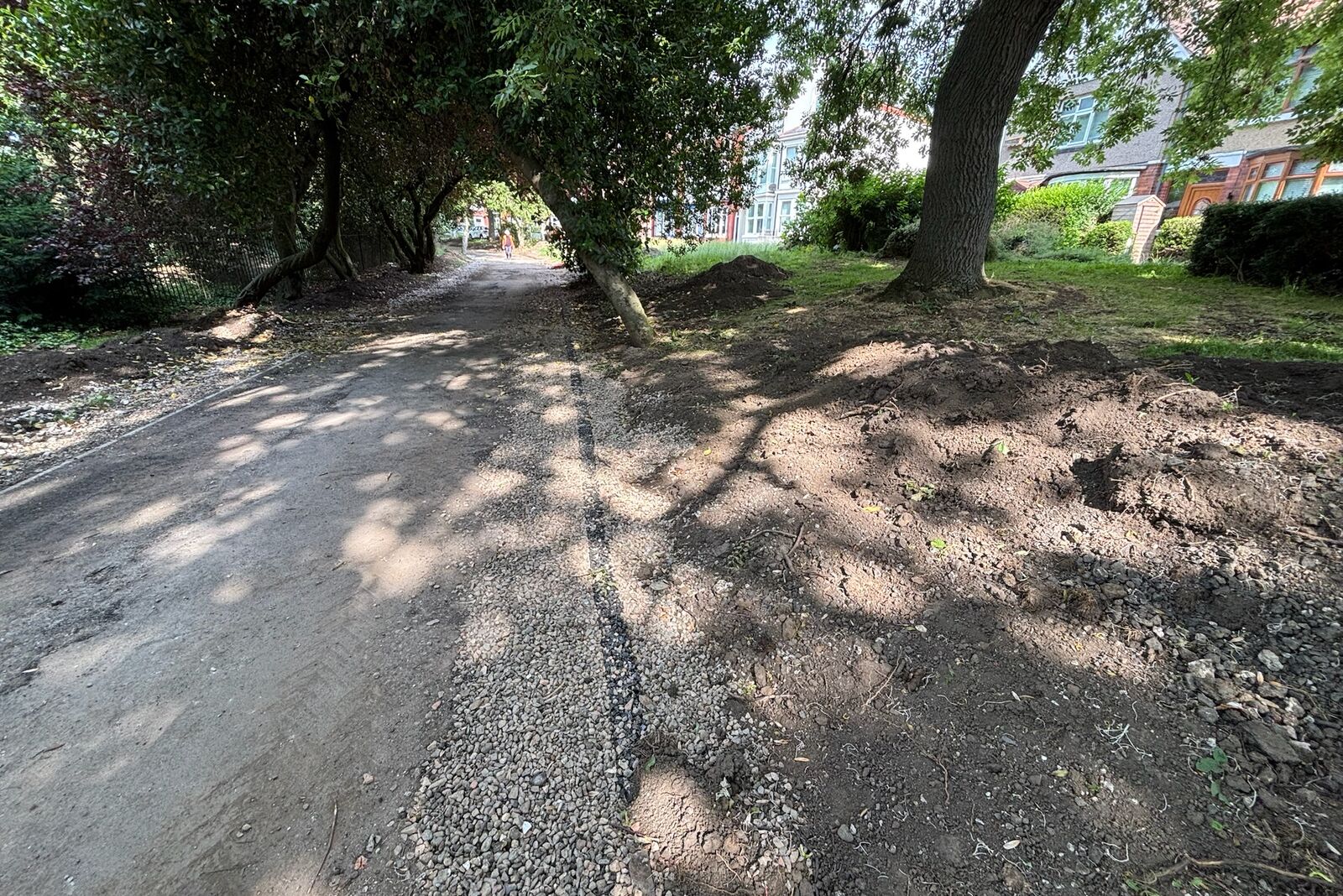
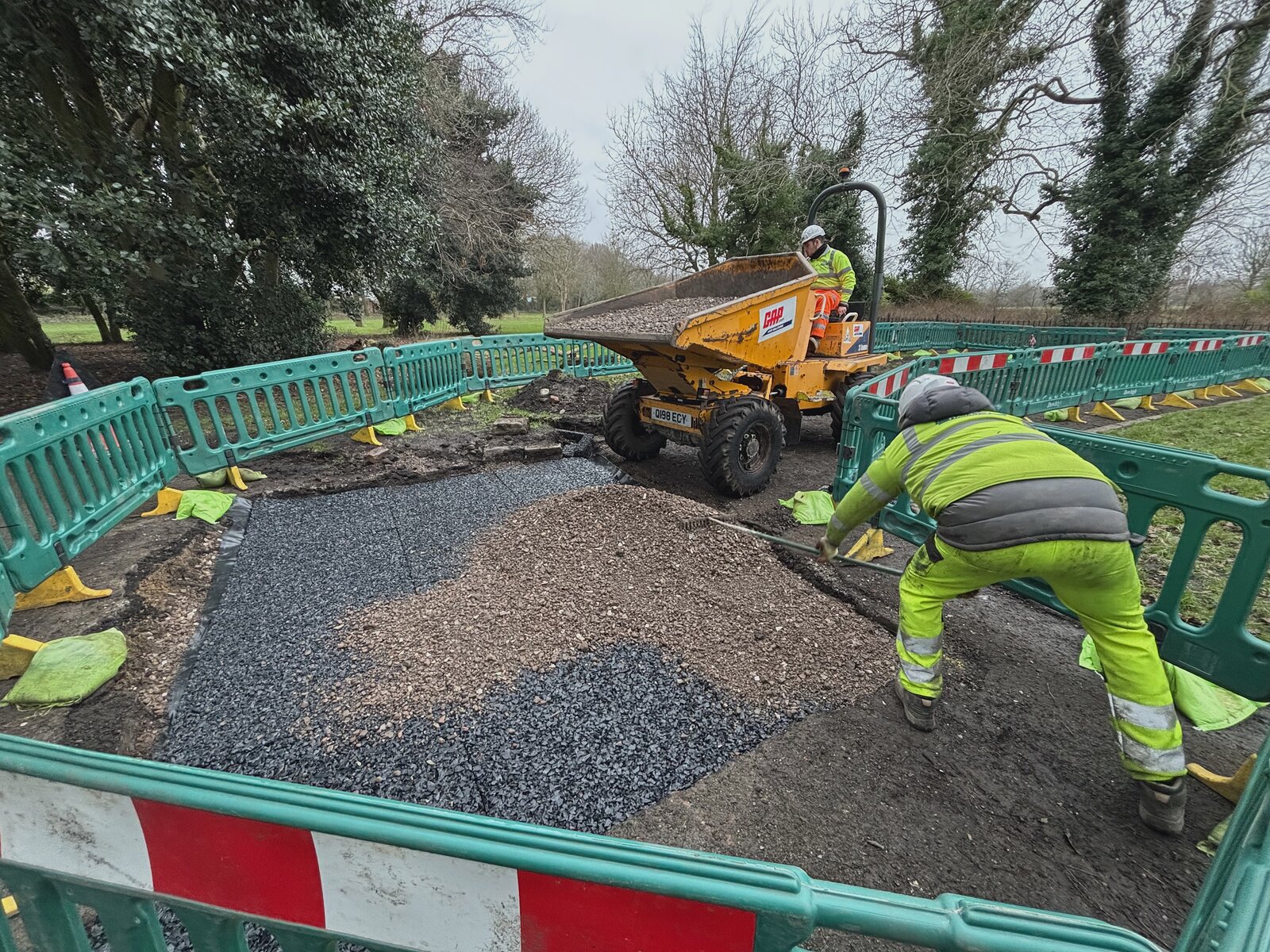
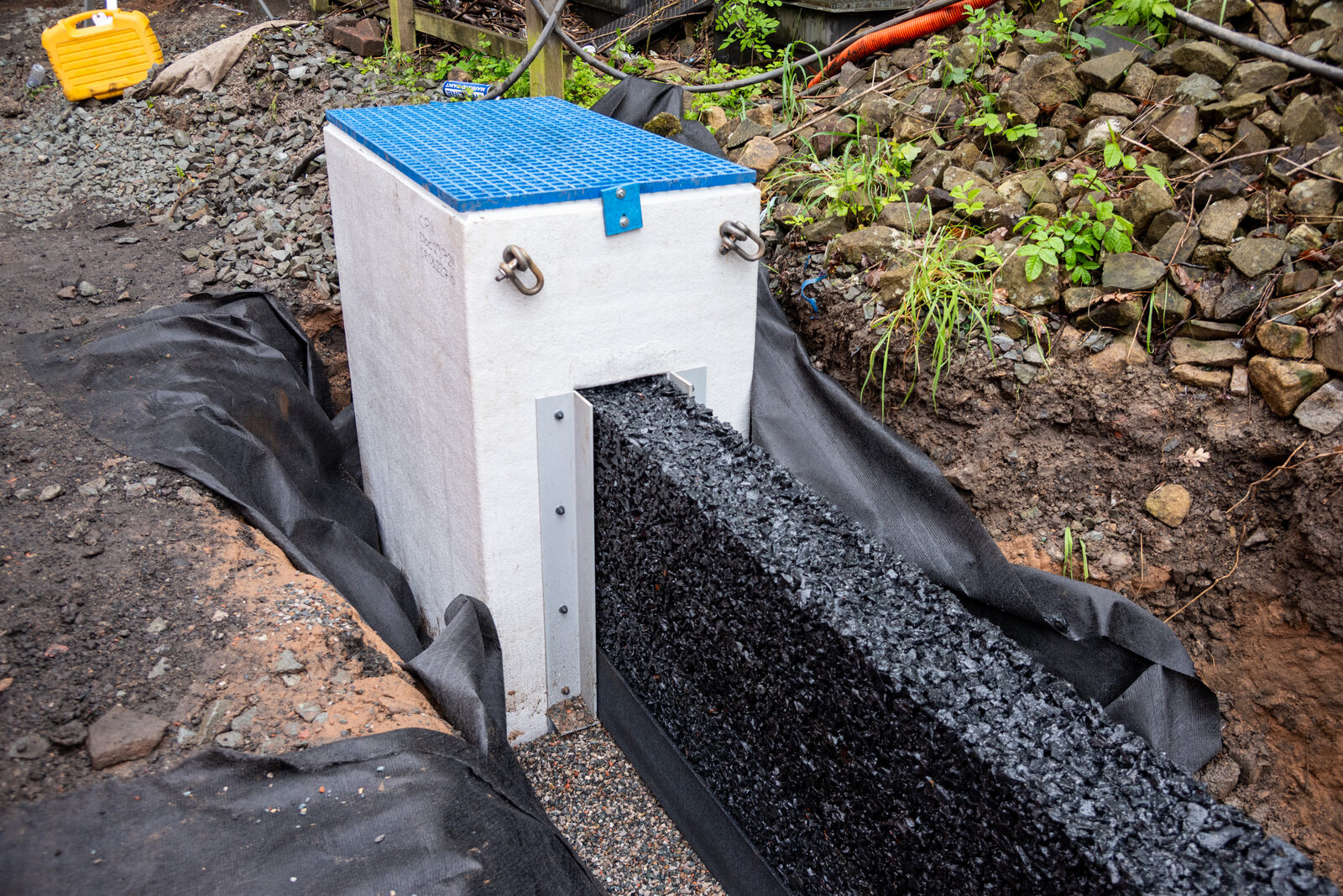
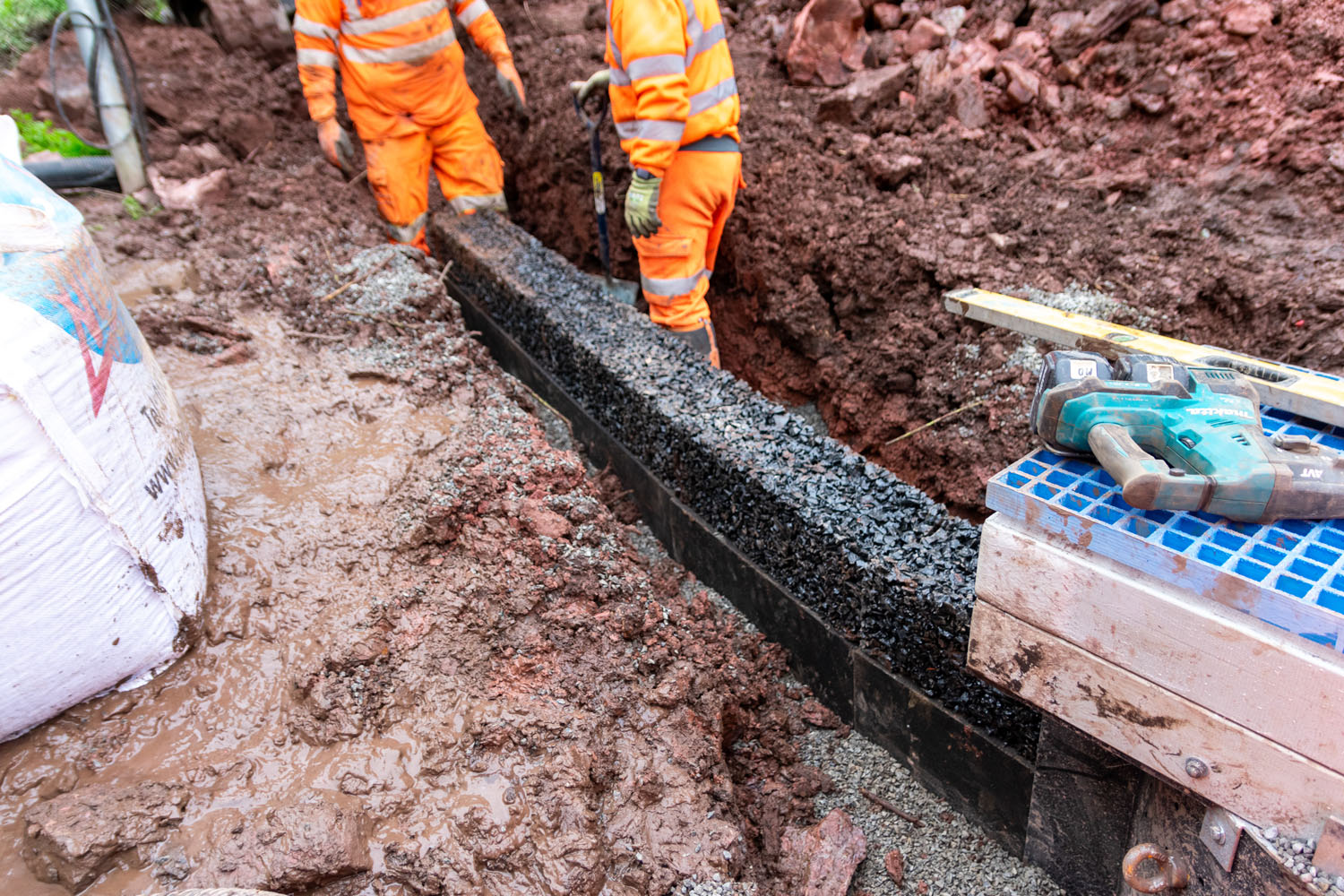
- 600 m de Rosehill Grip Strip affleurant — blocs élancés de 100 × 200 mm en caoutchouc recyclé installés directement dans des tranchées peu profondes remplies de gravier, typiquement de seulement 250 mm de profondeur, restant au-dessus des racines d'arbres que des tranchées de drainage conventionnelles auraient sectionnées
- Engins compacts, dégâts minimes — les tranchées peu profondes ont été creusées avec de petits engins plutôt qu'avec les lourds engins de chantier qu'exige un drainage canalisé profond, réduisant au minimum les perturbations des zones racinaires, des pelouses et des plantations établies
- Spécifié nommément dans les détails constructifs du conseil municipal — « recycled rubber Rural Drainage Solution (RDS) drainage blocks… by Rosehill Drainage Ltd » (blocs de drainage RDS en caoutchouc recyclé de Rosehill Drainage Ltd), posés le long des chemins poreux et en travers des points bas pour éliminer toute stagnation dès la conception
- Lignes d'interception à chaque bord de terrasse, captant les eaux de ruissellement avant qu'elles n'atteignent le talus
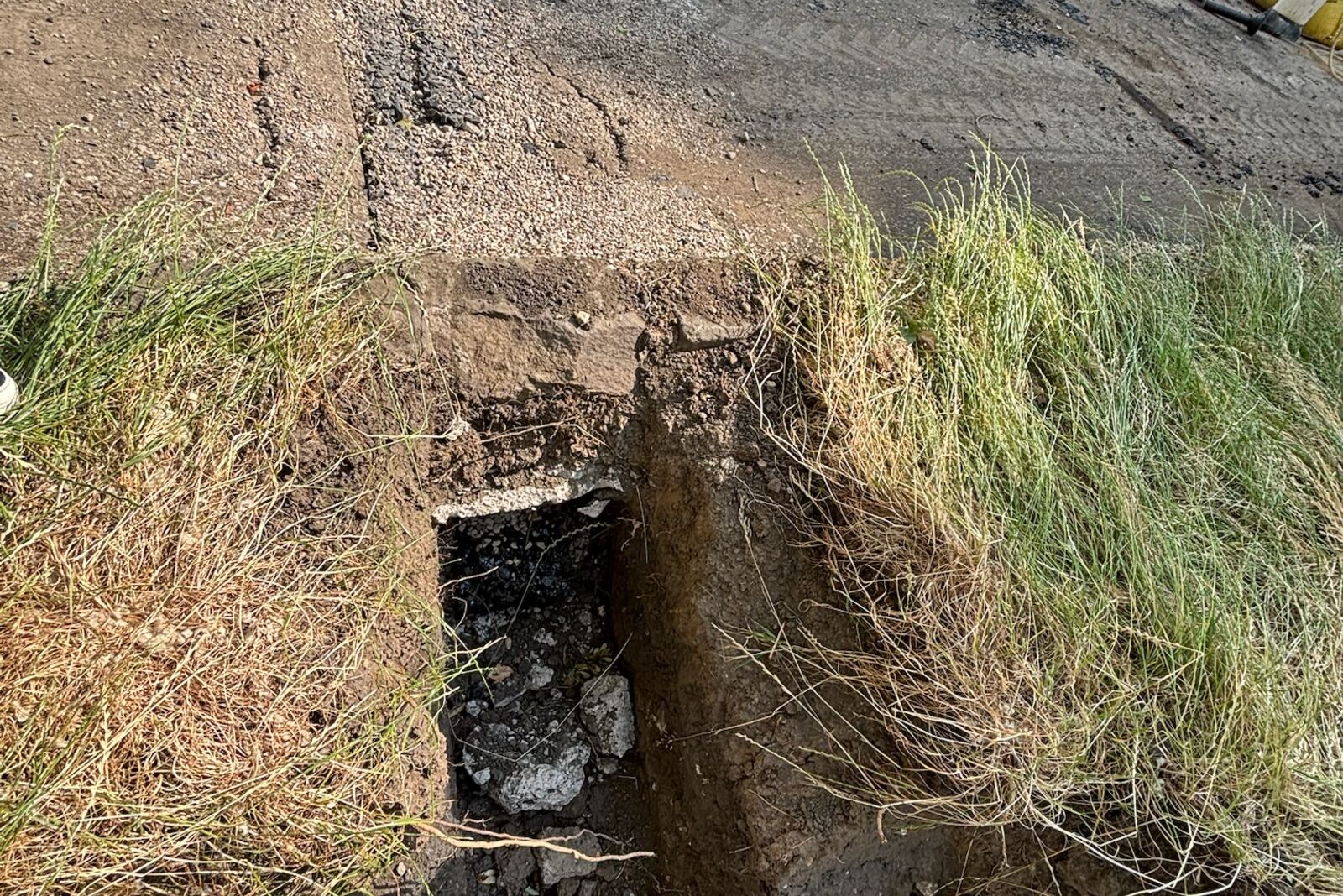
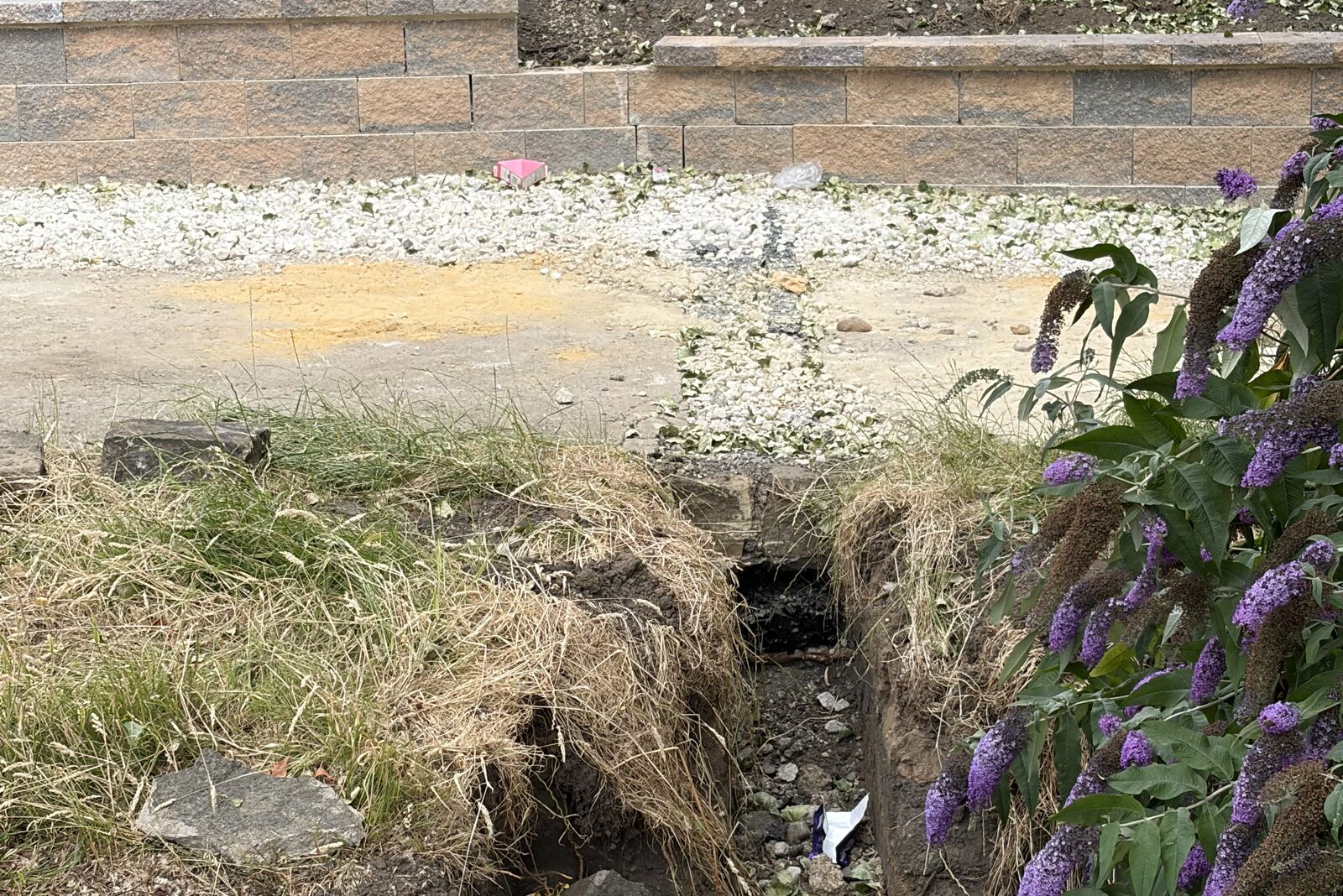
- Exutoires discrets vers Burn Valley Beck — regards Stakkabox posés sous les lignes de Grip Strip, avec des tuyaux de 100 mm descendant le talus et des sorties en grès vitrifié scellées au mortier à travers le mur du ruisseau
- Finitions habillées de gravier et de galets fondant les lignes de drainage dans le paysage du parc
le long des chemins et des terrasses
— couches de roulement et de liaison
aucune excavation profonde
à entretenir
Résultats
- Ruissellement capté à la source sur chaque terrasse, mettant fin à l'affouillement et au lessivage qui endommageaient le talus et les murs
- Murs de soutènement patrimoniaux protégés — les tranchées peu profondes de 250 mm ont évité de déstabiliser les fondations des murs
- Arbres matures préservés — les tranchées peu profondes sont restées au-dessus des zones racinaires, évitant le sectionnement des racines que des tranchées de drainage profondes auraient provoqué le long des allées bordées d'arbres
- Finition affleurante, sans risque de trébuchement sur toute l'emprise — sûr pour tous les usagers du parc et les engins d'entretien
- Rien à obstruer — les bandes de caoutchouc poreux n'ont ni grilles ni fentes que la litière de feuilles pourrait obstruer
- Drainage compatible SuDS grâce à un revêtement poreux et au caoutchouc recyclé, avec un rejet à débit contrôlé vers le cours d'eau
- Installation rapide parallèlement aux travaux de resurfaçage, avec des lignes de drainage tranchées, posées et habillées lors des mêmes interventions, en utilisant uniquement des engins compacts
Pourquoi c'est important
Les parcs et voies vertes sont des lieux difficiles pour le drainage conventionnel. Les avaloirs se bouchent avec la litière de feuilles, les caniveaux et les grilles créent des risques de trébuchement, et le drainage canalisé traditionnel implique des tranchées profondes — sectionnant les racines des arbres établis, longeant au plus près les fondations patrimoniales et amenant de lourds engins de terrassement sur le paysage même que le projet est censé protéger. Dans un parc mature, ces dommages de chantier peuvent perdurer au-delà du problème que le drainage devait résoudre.
At Burn Valley Gardens, pairing full-depth porous construction with flush Grip Strip delivered a drainage scheme that is effectively invisible: water disappears through the surface, travels along the shallow rubber strips, and re-emerges only at controlled outfalls into Burn Valley Beck. Because the strips sit in trenches typically just 250 mm deep, dug with compact plant, the trees, root zones and heritage walls came through the works untouched. Maintenance is minimal, and the park keeps its character.
La même approche — le profil élancé de 100 × 200 mm en caoutchouc pressé du Grip Strip installé directement dans le sol — convient aux sentiers, pistes cyclables, talus et à tout paysage où l'eau doit être interceptée sans tranchées profondes, sans engins lourds ni gros œuvre de génie civil.
Runoff from the terraced paths had been damaging the embankment and washing out material from behind the park's original retaining walls for years, but in a mature Edwardian park, deep trenches for conventional piped drainage were never an option. Grip Strip let us intercept the water at every terrace edge from shallow trenches dug with compact plant — the heritage walls and tree roots were untouched, and the flush finish is safe for everyone who uses the park. There are no gullies or gratings to clear, and the drainage lines blend in so well most visitors won't know they're there.
Images d'installation
Détails du projet
Discutez de votre projet
Laissez notre équipe vous aider à trouver la solution de drainage adaptée à votre projet d'infrastructure.
Nous contacter